Codex Themes for Creator Portfolios
Creators can use one owned artwork as the visual source for a Codex theme, then share a preview derived from that artwork instead of exposing a real coding workspace. This produces a portfolio-friendly artifact while keeping chats, code, project names, and email addresses out of the image.
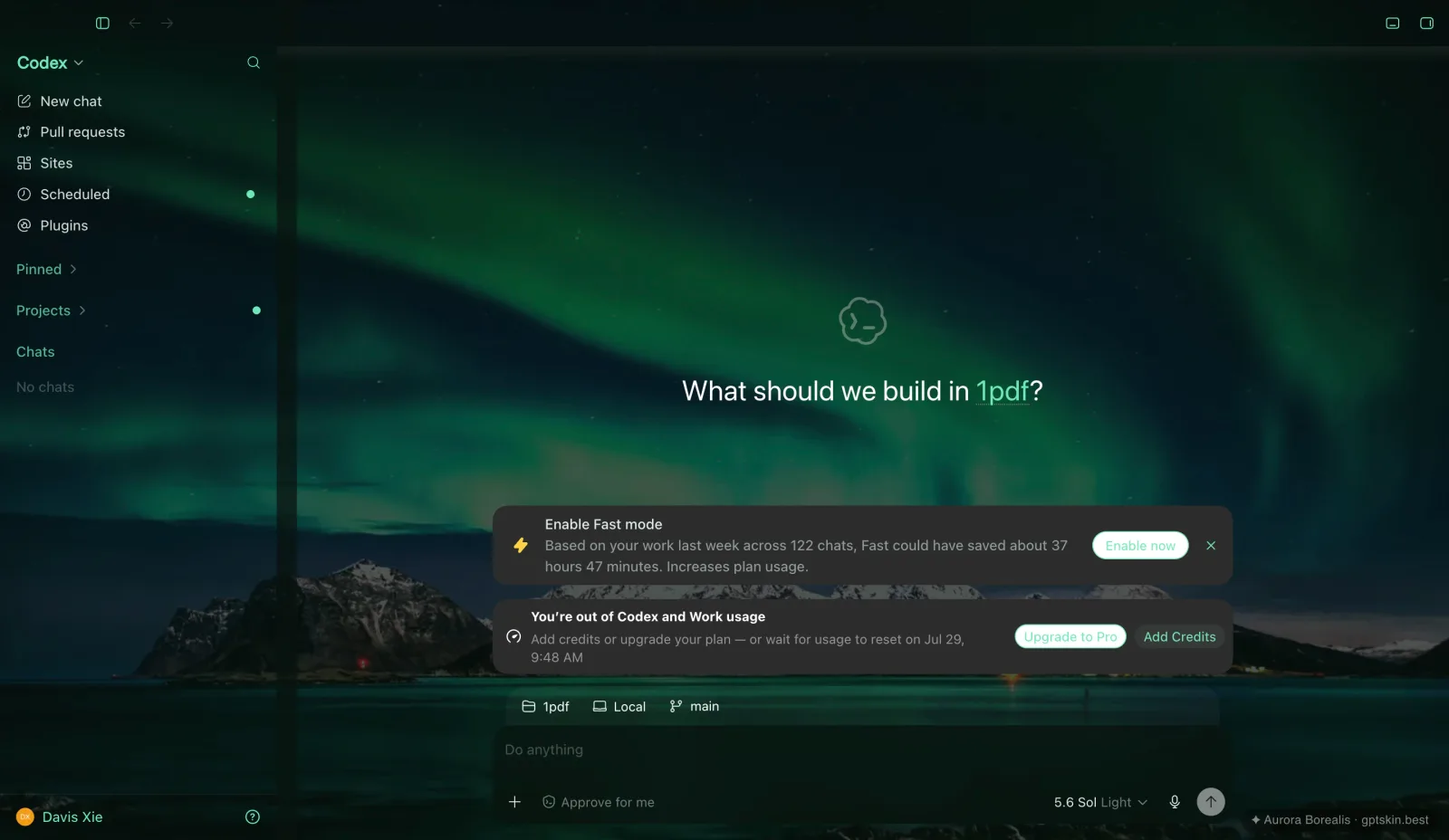
Choose portfolio-safe input
Use artwork you created, licensed, or have permission to transform. Strong source images usually have a recognizable palette, one focal area, and enough quiet space for interface surfaces. Avoid confidential client assets and images whose license prohibits derivative work.
Build and present the work
- Preserve the original source file and its license or ownership record.
- Create the image-backed theme and inspect text, code, selection, warning, and disabled states.
- Save the theme locally and verify that the default appearance can be restored.
- For a public portfolio, show the original artwork beside the source-derived theme preview.
- Describe the real process—source choice, palette constraints, and readability decisions—without inventing usage metrics.
The GptSkin showcase privacy rule is strict: community previews are derived from the submitted source image, never from a screenshot of a user's actual Codex window.
What this does not provide
GptSkin does not transfer copyright, certify accessibility, or guarantee portfolio traffic. It does not read conversations or patch the official app. The Skill applies presentation locally through a loopback-only runtime connection; review the full boundary in Security.
Cost and next step
Use any of the six free presets to learn the workflow. A new custom image theme costs 20 Credits, and reapplying a saved local theme is free. Check Pricing and follow Installation.
This is a use-case guide, not a claimed creator testimonial. It follows the GptSkin Editorial Policy. Last verified: July 28, 2026.